In any home, the kitchen is where life truly happens. It is the sanctuary where the first cup of coffee is poured in the quiet of the morning, where children do their homework at the island, and where friends gather for wine and laughter while dinner simmers on the stove. There is a reason we call it the “heart of the home.”
However, in modern interior design, kitchens often run the risk of feeling a bit cold. Between the stainless steel appliances, marble countertops, and porcelain tile backsplashes, the space can start to look more like a laboratory than a living space. This is where Farmhouse Kitchen Decor saves the day. Specifically, a handcrafted wooden wall clock serves as the perfect bridge between functional utility and warm, rustic soul.
Here is why a wooden clock is the missing piece in your kitchen design and how to choose the perfect one for your space.
Balancing the “Cold” with Organic Warmth
Modern farmhouse design is all about balance. It takes the clean, crisp lines of contemporary architecture and softens them with organic materials. Wood is the most powerful tool in this balancing act.
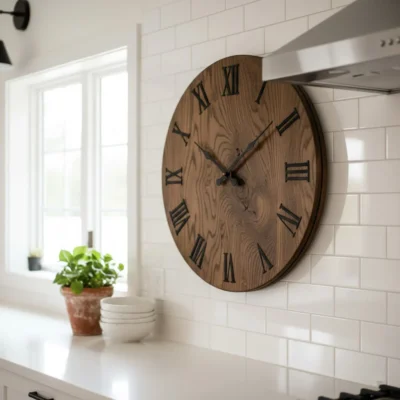
When you hang a thick, solid wood clock on a wall of white subway tiles or above a sleek quartz countertop, something magical happens. The natural grain of the wood—the knots, the swirls, and the varying tones—breaks up the monotony of “hard” surfaces. It introduces an organic texture that invites the eye to rest and makes the room feel instantly more lived-in and welcoming.
The Clock as a Practical Focal Point
Decorating a kitchen can be tricky because counter space is a premium. You don’t want clutter near your prep area, so the walls become your primary canvas. While paintings and prints are lovely, a kitchen demands something that works as hard as you do.
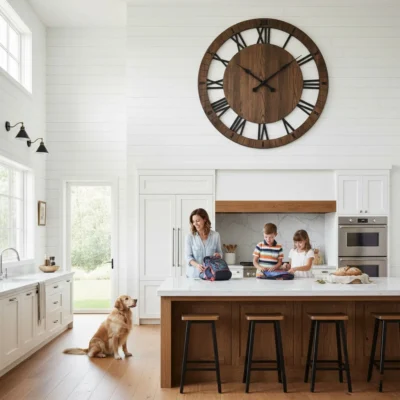
Time is the pulse of the kitchen. Whether you are timing a roast in the oven, tracking how long the dough has been rising, or simply making sure the kids are out the door for the school bus, the clock is the most-viewed object in the room. By choosing an oversized wooden clock, you aren’t just adding a timepiece; you are creating a “visual anchor.” It fills the “dead space” on a high wall or above a pantry with purpose and presence.
Choosing Your “Wood Look”: Tailoring to Your Sub-Style
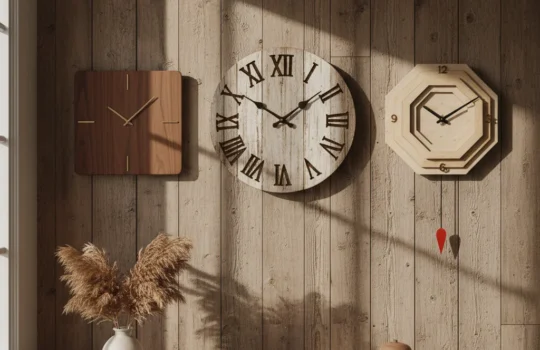
Not all farmhouse kitchens are the same. Depending on your choice of wood and finish, your clock can push your decor in several different directions:
-
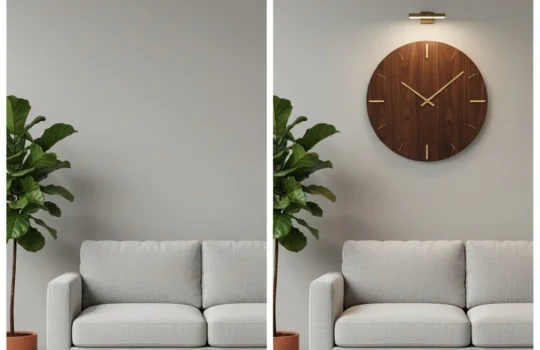
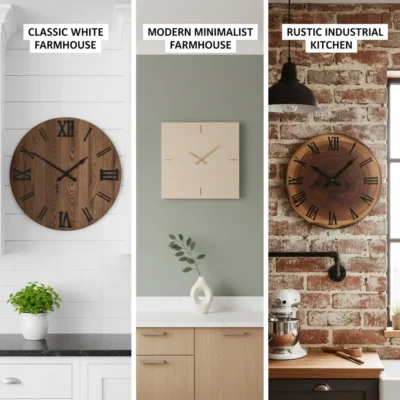
The Classic White Farmhouse: If your kitchen is dominated by white cabinets and light gray walls, go for high contrast. A Dark Walnut or Reclaimed Oak clock will pop against the light background, providing a sophisticated, grounded look.
-
The Modern Minimalist Farmhouse: For a cleaner, Scandi-inspired look, choose light woods like Maple or Ash. Look for clocks with simple markings or no numbers at all. This maintains the “airy” feel while still providing that essential wood texture.
-
The Rustic Industrial Kitchen: If you have black hardware, exposed beams, or brick accents, look for a clock that mixes materials. A wooden face paired with black iron Roman numerals or metal hands creates a “workshop” vibe that is rugged and timeless.
Strategic Placement: Where to Hang Your Clock
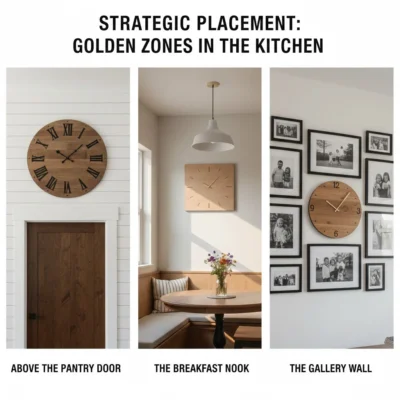
Where you place your clock is just as important as the design itself. In a farmhouse kitchen, there are three “golden zones” for placement:
-
Above the Pantry or Mudroom Door: This is often an overlooked space. Placing a large wooden clock here utilizes vertical height and makes the doorway look like a grand architectural feature.
-
The Breakfast Nook: If you have a corner with a table and bench, hanging a clock there creates a “cafe” atmosphere. It defines the dining area as a separate, cozy space from the “work” area of the kitchen.
-
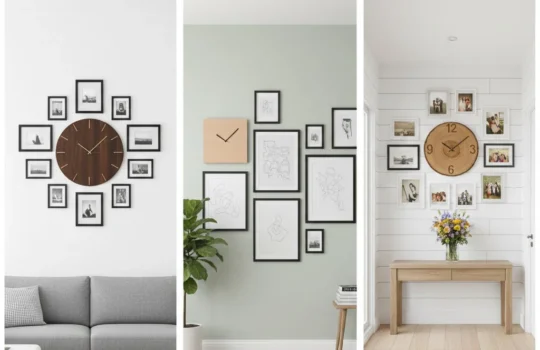
The Main Gallery Wall: Many farmhouse kitchens feature a “command center” or a gallery wall of family photos. A round wooden clock is the perfect way to break up a series of rectangular frames, adding geometric interest to the arrangement.
The “Silent” Factor: Why It Matters
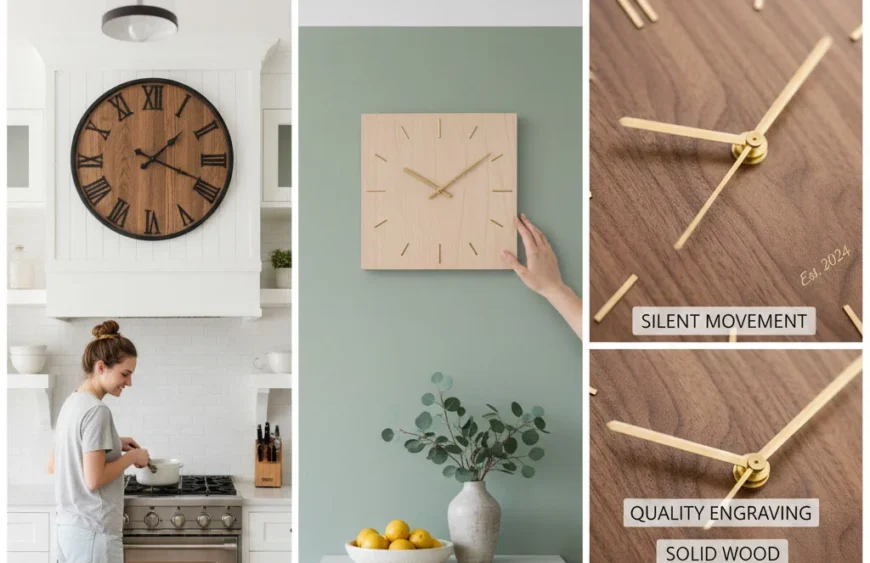
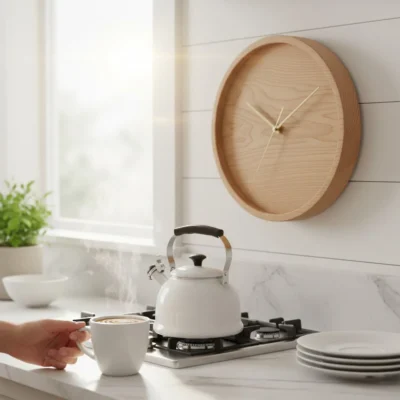
In the quiet moments of the morning, the last thing you want is a loud, intrusive tick-tock echoing through the house. Many mass-produced clocks use cheap plastic mechanisms that are remarkably noisy.
For a high-end farmhouse kitchen, a silent quartz movement is essential. It provides a “sweep” second hand that moves fluidly and silently. This ensures that the only sounds in your kitchen are the ones you want to hear: the whistle of the kettle, the sizzle of the pan, or the sound of family conversation.
Durability in the Kitchen Environment
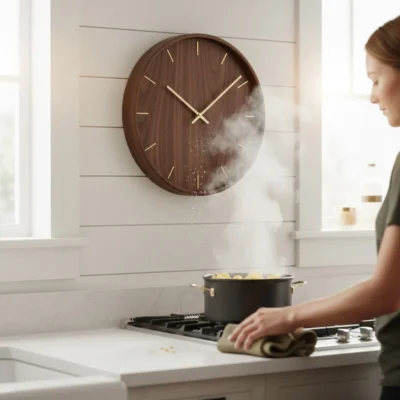
A kitchen is a “working” room. It experiences steam, heat from the oven, and the occasional splatter. This is why investing in solid wood is vital. Unlike MDF or cheap veneers that can peel or warp when exposed to humidity, solid timber (like Oak or Walnut) is incredibly resilient.
A high-quality wooden clock is finished with protective oils or lacquers that repel moisture. It is an investment that won’t just look good today—it will become a family heirloom that ages gracefully alongside your home.
Bringing the Heart to Your Home
A kitchen without a clock feels slightly unfinished, but a kitchen without wood feels cold. By combining the two, you create a piece of decor that is as functional as it is beautiful.
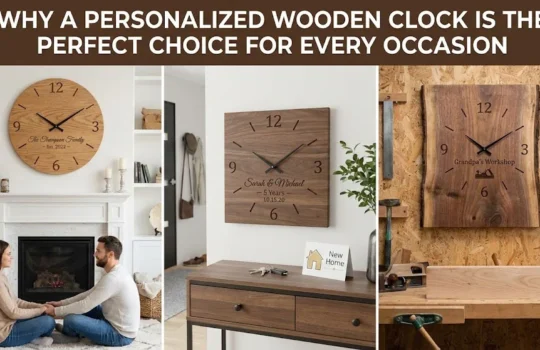
Whether you are looking for a personalized family clock or a grand, oversized statement piece, remember that you are doing more than just “buying a clock.” You are choosing the heartbeat of your home. You are selecting the piece that will watch over every holiday meal, every birthday cake, and every quiet morning for years to come.