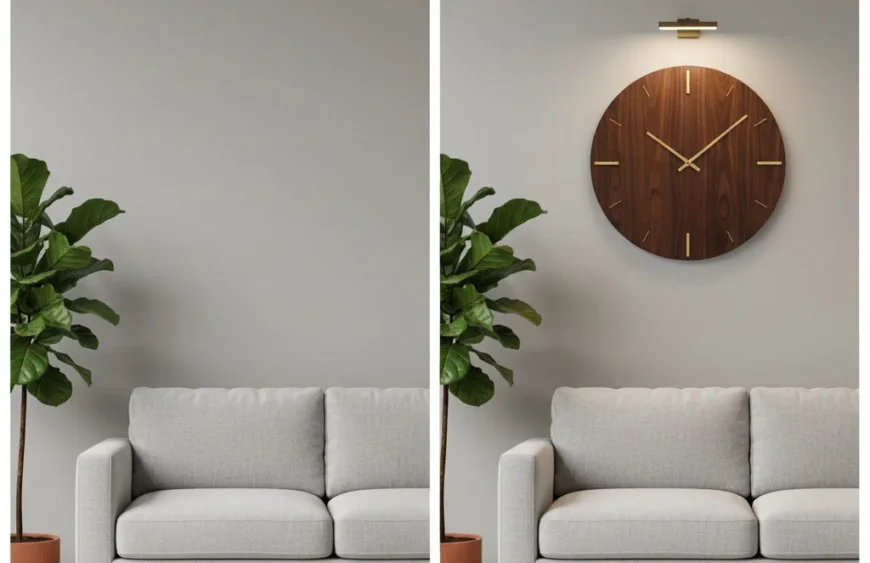
We’ve all been there. You move into a new home, or perhaps you’ve just finished a fresh coat of paint, and you’re standing in the middle of the room staring at it: The Big Blank Wall. It’s intimidating. A large, empty vertical space can make even the most beautifully furnished room feel cold, echoing, and unfinished. Most people react to this by trying to “clutter” the problem away—hanging a dozen small mismatched frames or sticking a tiny mirror in the center of a ten-foot expanse.
The secret to professional interior design isn’t filling every square inch; it’s about creating a focal point. You need a “hero” piece that commands attention, anchors the room, and sets the tone for the entire space. For those who love the warmth of natural materials and the charm of functional art, nothing does this better than an oversized wooden wall clock.
Here is how you can master the art of the focal point and turn that boring blank wall into the most talked-about feature of your home.
The Rule of Scale: Why Bigger is Often Better
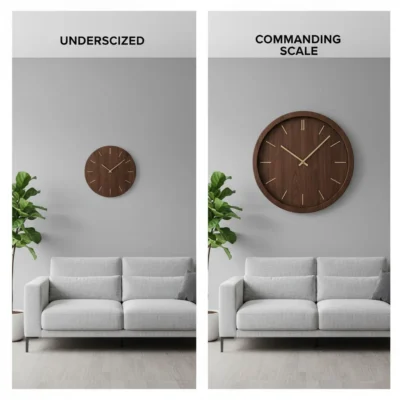
The most common mistake in wall decor is “undersizing.” If you have a massive wall and you hang a small 12-inch clock, the wall won’t look decorated, it will look like the clock is lost at sea.
When it comes to creating a focal point, you must embrace Scale.
-
Commanding Attention: A large clock (24 to 30 inches or more) acts as a visual anchor. It tells the eye exactly where to look the moment someone enters the room.
-
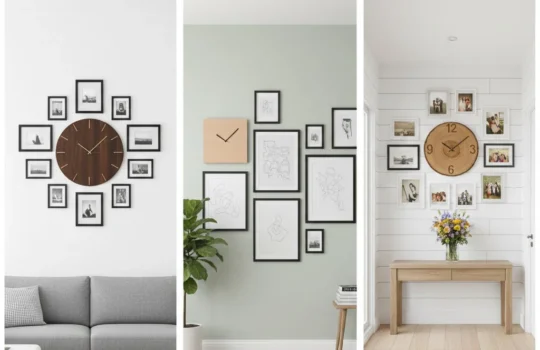
The 60/40 Rule: A good designer’s trick is to ensure your “hero” piece occupies about 60% of the visual space above a piece of furniture (like a sofa or a console table). If your sofa is 80 inches wide, a tiny frame will look awkward. A 30-inch solid wood clock, however, provides the “visual weight” needed to balance the heavy furniture below it.
Contrast and Material: Choosing the Right Wood
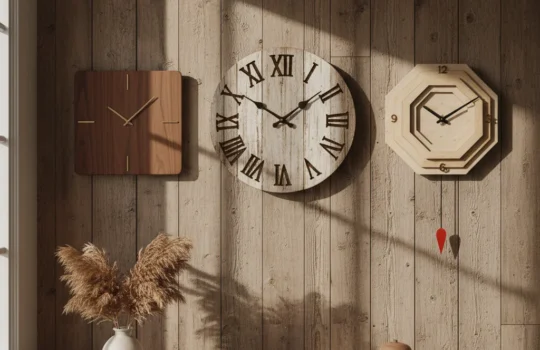
A focal point only works if it stands out from its background. Since you are working with a wooden wall clock, the type of timber and its finish will determine the mood of the room.
-
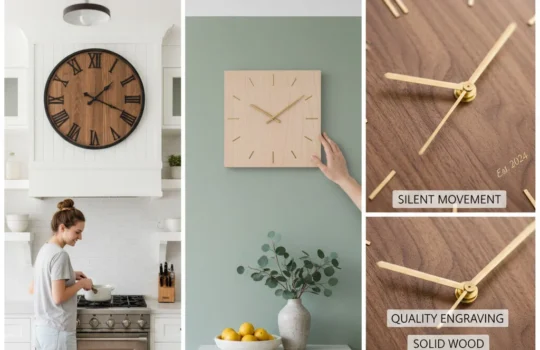
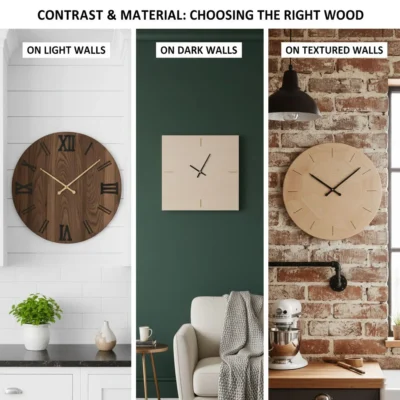
On Light Walls (White, Cream, or Light Gray): This is the perfect canvas for Dark Walnut or charred “Yakisugi” wood. The deep, chocolatey tones of the wood against a crisp white wall create a high-contrast “pop” that feels sophisticated and modern.
-
On Dark or Accent Walls (Navy, Charcoal, or Forest Green): To create a warm, glowing focal point, choose lighter woods like Natural Oak or Pine. The golden hues of the wood will stand out against the dark paint, making the wall feel cozy rather than gloomy.
-
On Textured Walls (Brick or Stone): If your blank wall is made of industrial brick or rustic stone, a smooth-finished, circular wooden clock provides a beautiful geometric counterpoint. The “softness” of the wood grain balances the “hardness” of the masonry.
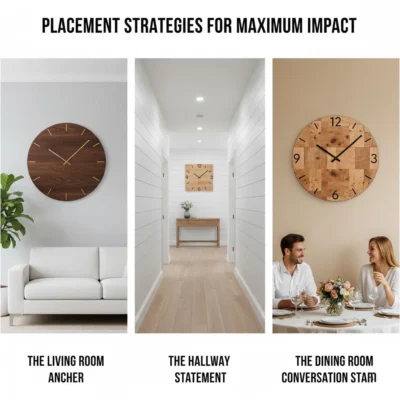
Placement Strategies for Maximum Impact
Where you hang your clock determines how the room “flows.” Here are the three most effective strategies:
-
The Living Room Anchor: Center the clock directly above the sofa or the fireplace mantel. This is the traditional focal point of the home. It creates a sense of symmetry and order, making the room feel grounded.
-
The Hallway Statement: Do you have a long, narrow hallway that feels like a tunnel? Hang a large wooden clock at the very end. This creates a “destination” for the eye, making the hallway feel shorter and more like an intentional gallery space.
-
The Dining Room Conversation Starter: Hanging a clock in the dining room—where guests can see it while gathering—blends functionality with art. It suggests a space where time is valued, but nature (the wood) is respected.
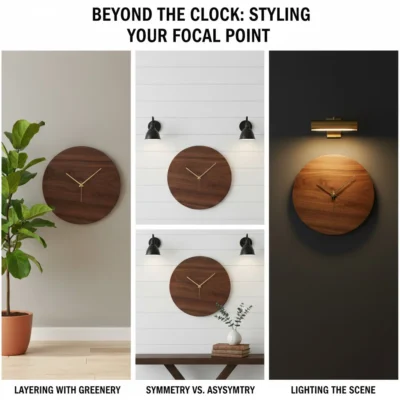
Beyond the Clock: Styling Your Focal Point
To truly make your wall look like it was designed by a professional, don’t just “hang and leave.” You need to style the area around the clock to create a complete vignette.
-
Layering with Greenery: Place a tall potted plant (like a Fiddle Leaf Fig or a Monsterra) to one side of the clock. The organic green leaves against the warm wood grain create a “biophilic” design that feels fresh and alive.
-
Symmetry vs. Asymmetry:
-
Symmetry: For a formal, traditional look, flank the clock with two identical wall sconces or two smaller matching frames.
-
Asymmetry: For a modern, “curated” look, place the clock slightly off-center and balance it with a tall vase or a stack of books on a console table below it.
-
-
Lighting the Scene: Use a “picture light” mounted above the clock or recessed spotlights in the ceiling directed at the wood. This highlights the texture of the grain at night, turning your clock into a glowing piece of sculpture.
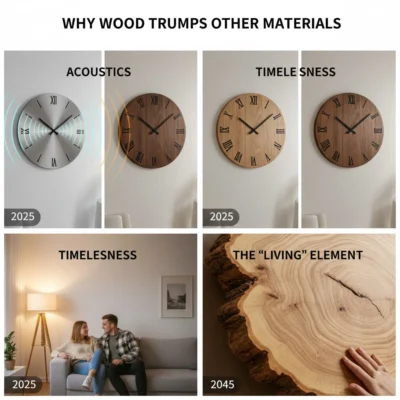
Why Wood Trumps All Other Materials
While you could choose a metal or plastic focal point, wood offers unique benefits for large-scale wall decor:
-
Acoustics: Large, empty rooms often have an annoying echo. Because wood is a porous, natural material, a thick wooden clock can actually help dampen sound and soften the acoustics of a room compared to glass or metal.
-
Timelessness: We’ve all seen “trendy” wall art that looks dated after six months. Wood is “trend-proof.” A high-quality Oak or Walnut clock that looks great in 2025 will look just as elegant in 2045.
-
The “Living” Element: No two pieces of wood are identical. Your focal point is literally a slice of nature, with its own history told through its rings and knots.
Installation Tips for Heavy Statement Clocks
A large, solid wood clock is heavy-duty, so you must install it correctly to ensure it stays the focal point (and doesn’t end up on the floor!).
-
Find the Stud: For oversized clocks, always try to mount the bracket into a wall stud. If a stud isn’t available where you want to center the clock, use high-quality heavy-duty toggle bolts.
-
The “Golden Rule” of Height: Most people hang their decor too high. The center of your clock should be at “eye level”—roughly 57 to 60 inches from the floor. This ensures that the viewer doesn’t have to strain their neck to admire your masterpiece.

Your Wall is a Canvas
A blank wall isn’t a problem to be hidden; it’s an opportunity to be seized. By choosing an oversized wooden clock as your focal point, you aren’t just filling space—you are adding character, warmth, and a sense of “pulse” to your home.
You are telling everyone who enters that this room is intentional, that it values natural beauty, and that every hour spent within these walls is significant.